
Well, spring has finally sprung and lots has happened since I last posted here. Bored with the old blog appearance, I opted for a new one. More importantly, however, is the news on the cat front: last fall, two of our three old cats, Black Bear (my favorite, ahem) and Little Girl, passed away within a week of each other.
Late in October, Bear started acting differently. A subtle change at first, but I noticed. I also had a feeling that it was not just a couple of "quiet days" that cats have now and then. Always a healthy eater, I knew he was in trouble when he began leaving some of his dinner on his plate. When he was six years old, he had been a "plugged" cat, suffering from Feline Urological Syndrome and had to be rushed to the animal hospital to be catheterized lest he die of uremia. Since that time, he had been on daily methionine to acidify his urine. Now, he was nearly 14 years old. I had a sinking feeling that the old problem had returned and morphed into kidney failure.
J. and I took him to our holistic veterinarian, who took blood for liver and kidney function tests. Two days later, I received the news: terminal kidney failure. The vet said his numbers were off the charts, and it was amazing that he had done as well as he had for so long. I attributed that fact to the homemade diet he had been on for the past few years. Once I calmed down, I called back and made an appointment to euthanize him. It was three days hence, and I was determined to spoil him like crazy before the end of his life.
He was still eating, so we gave him all the neat treats we could think of: canned cat food, canned fish snacks, etc. He was pampered more than ever (quite a feat, I assure you). When the time came to bundle him off to the vet, we were sad, but knew we had done all that we could to give him a great life. I had hoped he would live to 20 years, but the end came quickly and he was in fine fettle until almost the very end.
Little Girl, who had been having some recurrence of urinary tract problems herself during the previous summer, became despondent over his loss. The only female, she had "belonged" to Bear, the alpha male, and was despondent without him. She would wait for him, and cry when he didn't appear. She stopped eating. Soon, her kidneys failed, as well; we had her put to sleep less than a week after Bear. To those who claim that animals cannot love, I have this to say: You are dead wrong.
Poor J. buried two cats in one week, the second one on his birthday. As he trudged up the driveway after putting out Miss P.'s trash, looking lost and depressed, I said, "Let's go out to lunch and stop by the shelter to see what they have on hand for kittens." He looked surprised, but agreed. No way was I going to let him remember his birthday only as the day he buried Miss Thing! So, off we went--and found ourselves a cute little bargain.
Next time: A new playmate for Goldie.
Sunday, April 10, 2011 7:45 PM
A New Blog Look and a New Kitten
Monday, June 14, 2010 11:04 AM
Make Moving Day Easy on Your Cats

Change is stressful for all of us, and moving ranks right up there with other life changes such as marriage and divorce. While you and your human family members can at least understand what is going on, your cats cannot and feel the stress more acutely. Since more people move during the summer months than at any other time of the year, this seems like a good time to go over some tips to make moving day flow as smoothly as possible, especially for your feline family members.
Keep your cats' things in their normal places as long as possible. Don't move their beds, feeding stations or litter boxes until the movers arrive (or right before). All the activity of packing will be stressful enough for them without them having to hunt for their food and boxes.
Feed them a light snack the morning of the move, or nothing at all if they tend to vomit when upset. Give fresh water, of course. If they tend toward nervousness, give them a quarter of a Calms Forte tablet each 2 to 3 hours before the movers are due to arrive. If they are difficult to pill, grind it up and mix with a small amount of their favorite wet food.
When the movers arrive, set the cats up in an empty room with their water, beds and litter box. Frightened cats can get underfoot, causing injury to themselves and others. They may also run out the door in a panic, never to be seen again. Spare them and yourself this trauma by keeping them in a closed room to which no one but you is allowed access. Placing their carriers in this room will make packing them up later easier still.
Pack up your cats and move them separately to the new location, ahead of the movers. Once there, set them up in a room that won't be entered, such as a large bathroom, as far away from the hubbub as possible. Stay with them until the movers arrive, then check on them whenever there is a lull in the action; this will help calm them.
Don't let them out until the movers have gone and outside doors are not being constantly opened and closed. Show them where their boxes are now located, and place their beds and water nearby. Don't feed them until they calm down a bit, or you'll have messes to clean up, for sure.
By the way, this is the perfect time to make changes to their lifestyle, such as making them indoor-only cats if they were not so before. The combination of upheaval and a new environment makes old habits less sticky, making them more open to other changes, as well!
Chat later!
Tuesday, April 27, 2010 1:25 PM
What Causes Diabetes in Cats?

Diabetes mellitus is a condition that is becoming ever more prevalent in both human and animal populations. The disease affects all mammals similarly, and the symptoms for humans and animals are very much the same. The islets of Langerhans, located in the pancreas, either secrete no insulin or not enough to be able to convert the glucose from carbohydrate-heavy foods into a form usable by the body. The latter situation causes adult-onset or Type 2 diabetes in humans, and is very often due to poor nutrition and obesity.
With cats (and dogs), the commercial diets they are commonly fed are definitely suspect, since there are many added sugars and carbohydrates that would not be present in a natural diet. Dr. Richard H. Pitcairn also points out that, just as with humans, diabetes is very possibly a form of auto-immune disease in animals. He notes that over-vaccination can actually bring on this disease, and that diabetic animals should no longer be vaccinated at all.
With insulin either not present or present but ineffective, blood glucose levels soar. Because the body cannot transform this glucose into energy that is bio-available, it simply moves through the kidneys and out of the body. The lack of usable nutrients and energy causes the animal to eat voraciously, often as they lose ground nutritionally. As the body struggles to dilute the high sugar content of the blood, thirst increases.
Usually, the first symptom the owner notices is that the cat is increasing its water intake and urinating much more than usual. If the cat is an outdoor pet, however, this change many not be noticeable until the disease has progressed so far as to be virtually untreatable. Although the owner may notice some weight loss and decreased energy levels in their pet, they may attribute these changes to natural aging, particularly since this disease usually shows up in middle-aged and older cats. Therefore, by the time the owner is concerned enough to have the cat checked by a veterinarian, the physiological damage caused by diabetes may be irreversible. Fatty liver disease, chronic pancreatic inflammation, nerve damage and circulatory insufficiency are all side effects of untreated diabetes.
The situation is not without hope, however. Treatment, generally consisting of drug and nutritional therapy, can prolong life. Tomorrow's post will discuss these issues.
Chat later!
Wednesday, April 21, 2010 3:42 PM
Protecting Pets from Outdoor Environmental Toxins

The great outdoors presents many opportunities for pets to become exposed to poisonous substances. The arrival of spring brings with it some particular hazards that dog and cat owners should be aware of, as well:
Cocoa hull mulch: Two people have emailed me recently regarding this hazardous material. Theobromine, the ingredient in chocolate and cocoa that makes it so poisonous to cats and dogs, is also present in this mulch made from the hulls of the cocoa bean. Dogs have died after ingesting this product, and it is equally dangerous for cats. If you must mulch your gardens, use another type; there are many alternatives.
Compost heaps: Some dogs can't seem to resist diving in and sampling the contents of these piles, newly visible after a winter of snow cover. Some veterinarians call this "garbage gut": The dog becomes ill after rooting around and finding a few not-completely composted delicacies. Usually they recover without permanent damage, but a trip to the vet is usually in order. A similar, more dangerous problem occurs when dogs ingest the carcasses of animals that died during the winter. Their decomposing bodies were partly frozen, but are now able to rot away with the warmer weather. The smell often attracts free-roaming dogs, who can develop pancreatitis and other symptoms of poisoning.
Pesticides: Lawn-care companies use a toxic brew to produce those green lawns, and animals who walk on freshly-treated surfaces can become ill. These chemicals can be absorbed through the pads of the feet, and cats will also lick these toxins off of their bodies. Insecticides used to control ants and termites are also dangerous to pets. Use natural alternatives whenever possible and don't allow your pets to roam onto neighbor's treated lawns.
Automotive fluids: Dogs and cats love to drink out of driveway puddles, but can get more than they bargained for when contaminants such as radiator fluid, oil and transmission fluid that leaked from parked vehicles are mixed in. Also, be sure to store these products on high shelves if your pets are allowed in your garage, since many pets actually like the taste of anti-freeze and may seek it out if they can smell it.
This list represents only a portion of the poisonous substances pets are exposed to in our modern life, and it's up to us to keep them safe. They look to us to protect them, so be aware of these outdoor toxins and take steps to protect your pet.
Monday, April 19, 2010 8:30 AM
A New Kitty for Miss P.

A short while ago, our neighbor Miss P. mentioned to us that she would like to adopt a new cat. She has always had many pets, but over the past two years their numbers have been decreasing. After the recent loss of Mr. D., her German Shepherd, her cat Punkin has been pretty lonesome. Miss Molly, the "retired" old lady cat, isn't much fun for him to play with. Upon hearing this comment, both J. and I immediately offered to accompany P. on this adoption quest. The date was set for a week ago Saturday, the 10th. A local garden center was hosting a kitten adoption day with the Dakin Animal Shelter, similar to what the shelter had done with local banks a while back. It was decided that a kitten would be a better choice than another adult, who would most likely be considered an interloper by Miss P.'s two cats.
At the appointed time, we all piled into our car and set off. As we discussed cats and kittens en route, Miss P. said, "One thing is for sure: I'm not getting another tri-color cat!" Miss Molly is a calico, and, as we have discussed here before, they certainly have their own special ways. We were all sure that there would be plenty of kittens to choose from, so color would not be a problem. Shortly, we arrived at our destination. Happy as clams, we all made for the door of the garden center, sure that many kittens awaited us there.
It didn't take long to ascertain that there weren't any kittens on the premises. We asked and were told that the adoption day was the next Saturday. Miss P. had called that very morning to check on the time, plus there was a sign out front announcing "Kitten Adoption Saturday", but with no posted date. Disappointed, we decided to go straight to the Dakin shelter in a nearby town to examine the merchandise at the very source.
As we entered the shelter, cages of adult cats greeted us. They were all very handsome, but where were the kittens? Oh, we were told again, they didn't have any kittens. What about the garden center's gala the very next weekend? They were going to bring kittens from their larger facility for that event. Did we want to look around, anyway? Well, what the heck, we said. We're here, so we might as well see what they have to offer.
It was lucky that we did. In another room, we immediately noticed a young female, very frisky and friendly. A four-month-old tortoiseshell, she was incredibly cute. But, another tri-color? Miss P. looked dubious, but was soon under her spell. We all took turns petting her and unanimously decided that this was the one. Wouldn't Punkie be surprised!
As the shelter employee clipped her nails, she writhed and squirmed in a most entertaining manner. When we got back to Miss P.'s house, Libby (as she was to be called) immediately set out to make the place hers. As Miss P. said later, "It's like she's been living her for years."
Another happy adoption story...with a moral. If you are ready to open your heart to a (or another) pet, don't be discouraged because the "ideal" you had in mind is not available. Look around the shelter, take it all in. Chances are the one you didn't know you wanted is right there waiting for you!
Chat later!
Monday, April 12, 2010 8:38 PM
Environmental Influences on Cat Behavior

Although I had always leaned more towards the environmental influences on behavior, I actually acquired the perfect test subjects for a study to prove this theory when I brought home the litter of kittens I found at the lab 13 years ago. If you are a regular reader of this blog, you know that we kept three of the kittens for ourselves and gave one of the males to some friends of ours. This turned out to be a perfect opportunity to observe how much influence the nurture part of the equation really would have in the personality development of these four kittens.
Early on, my friend had trouble with her kitten. She and her husband had two neutered middle aged cats already, both of whom were very nice. She would call me in a panic a few times a week over her inability to control this small kitten. "He's growling at everyone when I feed him!" She complained; when I told her to pick up his food and not let him eat it until he stopped growling, though, she refused. "He's got a sock in his mouth and is growling! He won't let me take it!" Take the sock away, I said. She claimed she couldn't. When he got bigger, he would beat up on the other males. One of them actually ran away for a while because she and her husband would not stop this behavior.
Mind you, we had three of these kittens at our house, all doing the same things but being taught the difference between what was acceptable and what was not. By the time these cats were a year old, our cats were sweet and friendly, while their brother, having learned he could do whatever he wanted, terrorized the other two cats in their household and drew blood from anyone silly enough to try to pet him. Of course, when people would ask my friend if her cat would bite or scratch, she would invariably say, "no", despite the livid marks on her own arms. If I was there, I would tell them the truth and let them make their own decision. She never cared for that!
Certainly, this proves that environment and training have more impact on the behavioral maturity of animals than heredity does. This makes perfect sense to me, since, now matter how well-bred an animal may be, there is no way for it to know the house rules unless taught. Young children and animals need direction and training to teach them how to behave later in life, when their youth and immaturity will no longer be an adequate excuse for bad behavior. Only an exemplary individual would be able to discern proper behavior in the absence of education.
While it is true that the older an animal gets, the harder it is to break bad habits (seems I've heard this about humans, too). It is not impossible, however, and patience and persistence on your part will reap great benefits if, for example, you adopt an older cat with ingrained habits you don't approve of. Be firm, gentle and loving and your cat will respond. Cats are smart, and will soon realize that doing things your way is the path to happiness!
Chat later!
Wednesday, March 31, 2010 7:05 AM
Cataracts in Cats

Cataracts are a common condition affecting people, dogs, and cats. It is a consequence of aging, as well as ultraviolet light exposure and also occurs as a side effect of certain diseases. The lens of the eye, situated behind the pupil, becomes cloudy, then milky-white. Generally, this results in some loss of visual acuity and, if the condition persists, could lead to blindness.
Some opacity of the of the animals' eye is apparent after about ten years of age and is normal. You will be able to see this in your older pet when the light strikes his eyes at a certain angle; this seldom causes vision problems. Cataracts, however, are another matter. They are more common in dogs than cats, probably because dogs spend more time outdoors. Eye injuries and infections, poor nutrition and diabetes are all contributing factors. Dr. Richard Pitcairn notes that dogs with hip dysplasia and chronic skin and ear problems are especially prone to developing cataracts. It makes sense that cats with such chronic health problems will also be prone to this disorder.
Although there is agreement that diabetes mellitus seems to lead to the formation of cataracts, the literature is silent on why this might be. Dr. Pitcairn notes that cataracts form even when the animal is on insulin treatment. Of course, administering insulin treats the most obvious symptoms of diabetes but does not cure or halt the disease. Inflammation, nerve damage and the hardening of blood vessels that occur with this disease could all account for the formation of cataracts. Capillaries, the smallest of blood vessels, are the first to be impacted. This type of vessel feeds blood to the eye. Without proper blood flow, the lens is affected.
Anti-oxidants are important to help slow the progression of cataracts. The increased water intake and urination that results from diabetes will flush many nutrients out of the body. Low-quality commercial pet foods won't supply what the animal needs in the first place. Therefore, it is important to supply these nutrients in supplement form. My sister-in-law recently expressed concern regarding the cataracts in her older Bichon Frise. She is currently giving him a quality supplement, which is an excellent idea.
What supplements need to be added to the diet? Anitra Frasier suggests the amino acids histidine and phenylalanine, as well as the B vitamins (especially B-2). Vitamin C is cited quite often, and is safe to give since it is water soluble. Vitamins A and E are also important, but are fat-soluble and so should be supplemented with a bit more caution.
Would you like to share your home with a disadvantaged child this summer? Check out the Fresh Air Fun Host Program for more details.
Chat later!
Monday, March 29, 2010 12:41 PM
Why Cats Purr
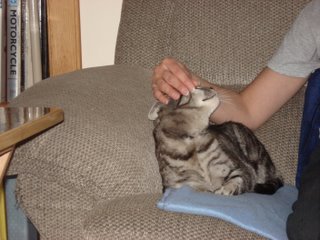
To cat lovers, the sound of a cat's purr is like music to our ears. It signals to us that our cat is happy and content, which makes us happy, as well. There is nothing like having a relaxed, purring cat snoozing on your lap as you unwind in your favorite chair at the end of a hectic day. All the annoyances of the day fade into the background when confronted with the sound of perfect contentment.
We know that cats purr when they are happy, but the fact is that cats will also purr when they are frightened, or injured. On the face of it, this seems odd, but it really is not. Purring is not only a way for cats to express contentment; it is also a self-comforting mechanism. Sweet Pea used to purr like crazy whenever we took her to the veterinarian, and would crave comfort. It was as if she was trying to convince herself everything really was okay.
How do cats produce this sound that is specific to felines only? The exact mechanism of purring is still somewhat up for debate. According to Desmond Morris, author of Catlore, there are two competing theories. One is that the sound originates from the cat's circulatory system. Somehow, this theory goes, cats are able to speed up the flow of blood through the vena cava, the heart's largest vessel. The "turbulence" caused by this activity accounts for the sound we hear as purring. The other, more reasonable theory, places the origination of this sound around the vocal cords. Cats have the remnants of a second set of vocal cords, which vibrate to produce the "purr". I have heard of these two theories before, and I agree with Morris that the second seems much more believable. It certainly would account for the vibration we feel when we pet the throat of our purring cat!
Do big cats purr, as well? I know that cheetahs do, for instance. According to the Library of Congress, other big cats, including lynx and puma, also purr, while others such as the lion, tiger and jaguar, do not. I remember reading something once that stated that if an adult big cat roars, it does not purr, and vice versa. Interestingly, all young cats are capable of purring, and do so; behaviorists believe that it is how cubs communicate their status to their mother. For some, it is outgrown once the animal becomes an adult and is not needed anymore. For others, like our domestic companions, the capacity is retained for life.
I think that just as kittens purr to let their mother know all is well, our pets are giving us the same courtesy when we pet them and tell them how wonderful they are. They are honoring us with their contentment. Makes you feel rather important, doesn't it?
Chat later!
Wednesday, March 24, 2010 2:43 PM
Can Heartworm Cause Heart Problems in Cats?

Heartworm is a disease that is mostly associated with dogs. Actually, it is an infestation rather than an actual disease. If the heartworms (yes, they are actually roundworms!) proliferate to the point that they begin to clog heart blood vessels, symptoms of heart disease occur. Since the parasite is transmitted by mosquitoes, the worms' young, or microfilaria, circulate in the animal's bloodstream in order to be picked up by the next biting mosquito.
I remember learning about heartworm in my college parasitology course. The text showed a necropsied dog heart, opened up to show all those gross worms. They even managed to find a cat heart to photograph in this manner, as well. While it is entirely possible for cats to contract heartworm, in reality, it is seldom seen. Why is this?
Well, for one thing, animal doctors aren't looking for it. When I worked for veterinarians, this time of year was a real money maker for them. We actually had a name for it: Heartworm Season. For a set fee, clients would bring in their dog, have us do a quick blood test to look for microfilaria, and, if all was well, leave with a large supply of heartworm preventative tablets. If the blood test was positive, it entailed intravenous treatments of an arsenic-based drug to kill the worms before the preventative treatment would be prescribed.
I saw a handful of dogs with heartworm in the years I worked for vet clinics, and they were usually large dogs. Smaller dogs, with smaller hearts, seemed more resistant. Cats were never tested, and I never heard of one that was diagnosed with heartworm disease. The dogs we treated did not exhibit any symptoms, either; we found the infestation upon examining the blood. Very possibly, they may never have exhibited symptoms, or their immune systems may have taken care of the problem before the heart was even involved.
Once again, economics was very probably the impetus behind heartworm testing and prevention, rather than any real health threat. If a cat actually did have heartworm, I would imagine it to be secondary to an existing heart problem. Heart disease would not only depress the animal's immune system so as to allow these parasites to gain a foothold, but would present an enlarged heart with slower pumping action. Since these worms can grow very large, a small animal just doesn't make the best host. There would have to be extenuating circumstances for this scenario to exist.
By the way, unless you live near wetlands and have large dogs that are outside most of the time, you might want to reconsider preventative heartworm medication. The idea behind it is to keep a very low level of a drug lethal to microfilaria circulating in your dog's blood for 6-8 months of the year. Talk to your vet, but also do a little research. The drug may not be doing your dog's circulatory system any good, either.
Chat later!
Monday, March 22, 2010 11:00 AM
Congestive Heart Failure in Cats

Congestive heart failure, or cardiomyopathy, is mostly a disease of older cats (people, too). As the name implies, the heart slowly begins to fail, resulting in symptoms that are directly related to the organ's inability to do what it is supposed to do: Move blood around the body. In a very old cat, years of doing its job can result in some decrease in heart function, which is a chronic condition and not especially serious. Eventually, the heart will stop beating and the animal will die of "old age". When symptoms come on fairly suddenly, and at a younger age, it is labeled, "acute" and needs attention. Often, it results from years of heart problems, and is not just the result of living a long life.
When commercial cat food first became popular in the late 1960s and 70s, cats began to develop cardiomyopathy because of the lack of taurine in the new diet. This amino acid, one of the building block of protein which is so important to carnivores like cats, was being destroyed by the processing methods of the industry. Once the problem was identified, taurine was added back into the product before packaging, along with many other nutrients which were also incinerated by the high heat of commercial cat food production. Taurine, however, cannot be synthesized by a cat's body and must be ingested directly. It is abundant in muscle and organ meat, and the broth in which these meats are prepared.
Nowadays, this does problem no longer occurs. However, the poor nutritional value of many commercial cat foods can contribute to this condition, just as it has an effect on many other organs and systems in the body. As the heart enlarges from the effort of trying to pump blood around the body, blood pressure drops and an accumulation of fluid develops in body tissues. Oxygen cannot be delivered as efficiently to all outreaches of the body, and the slow pace of blood flow can result in blood clots forming. Eventually, other organs also begin to fail since they cannot do their jobs without the consistent delivery of oxygen-rich blood.
One of the first symptoms you will notice is lethargy. The cat tires easily, and may have trouble breathing. A cough may develop, and the buildup of fluids may cause a swollen, "hard" belly. The mucus membranes may be pale, or have a bluish tinge. While appetite decreases, thirst increases since wastes are not being moved out of the body as quickly as they used to be, and toxins build up in the blood.
How long can a cat with heart failure live? If you recognize the symptoms and make the appropriate changes, you can keep serious symptoms at bay for a few more years. Tomorrow, we'll take a look at the kind of care that is necessary for a cat with cardiomyopathy.
Chat later!
Tuesday, March 16, 2010 11:12 AM
Kidney Failure in Cats

Kidney failure is a common problem in cats today, and getting more common. It is generally fatal, and incurable; the one bright spot is that it doesn't usually become lethal until the cat is older. This is because by then, the disease has progressed to the point where the remaining kidney tissue cannot keep up with the job of filtering the blood. So, while the kidneys are failing, you will probably not see any symptoms in your cat until it is almost too late. However, with a little knowledge and prevention, you may be able to prolong your pet's life for months, even years.
As we know, cats do not malinger, so it is sometimes difficult to know when they are not feeling well. It is important to know the symptoms of this disease, therefore, so that you can recognize them and take action. One thing to be cognizant of is that cats have very delicate urinary systems, and are prone to problems like cystitis, feline urological syndrome, kidney stones, and renal (kidney) failure. If your cat has a history of any of these urinary tract issues, the chances of kidney failure developing later on is greater. Richard Pitcairn, in his book, The Complete Guide to Natural Health for Dogs and Cats, notes that cats with bladder infections when they are young very often develop renal failure in middle age. Sweet Pea, who died of kidney failure, also had bouts of cystitis when she was younger. A weakness in the system will cause its premature failure, something you must realize early on.
Symptoms of kidney failure come on somewhat suddenly. The cat shows signs of increased thirst, drinks more water than he used to, and urinates more often. Soon, the animal starts to have other problems, such as recurrent bladder infections. Antibiotics will not work anymore, and the condition becomes chronic. The buildup of toxins in the animal's blood will cause general unthriftiness, such as rough coat, excessive shedding, lack of energy and lack of appetite. If, at this point, you have a kidney function test done at the veterinary hospital, it will come back positive for kidney failure. Even if the test denotes a "mild" case, know that the situation will degrade quickly if nothing is done.
Why is this such a problem, in this modern age? There's the reason: Commercial cat food diets, particularly dry food. Cats normally do not drink much water, desert creatures that they are. Dry cat food forces them to do so, and creates an imbalance in the cat's system. I read once that when a cat eats only dry food for a couple of days, such as when owners go away for the weekend, it takes several weeks for their internal water balance to get back to normal when normal feeding resumes. Essentially, dry food dehydrates your cat!
Tomorrow, we'll look at some treatments that can help preserve the remaining kidney function for a bit longer, making your cat more comfortable. We'll also look at the most important piece of the puzzle: Prevention!
Chat later!
Wednesday, February 17, 2010 12:29 PM
Feline Acne

Have you ever wondered what those little bumps on your cat's chin are? They're acne pimples, and are a fairly common problem (dogs get them, too). If you notice bumps and dark debris similar to flea dirt, chances are that your cat has feline acne. What causes this problem?
This condition has been associated with allergies, specifically allergies to chemicals in plastic water and food bowls. Just as these nasty toxins leach into our food and drink from plastic bottles and packaging, they can also affect our pets. Immediately change to glass or stainless steel bowls, and keep them clean. I wouldn't suggest ceramic, since most of this comes from China now, and there have been cases of high levels of lead in these items.
Another problem may be contamination from the cans that are used to package your pet's wet food. Lead solder used in the seams can leach into the food once the can is opened, so put the remainder in another container before you refrigerate (by the way, this is true of human foods, as well). Your pet may also have an allergy to certain additives in his or her food, so if the above steps don't help, you may want to try another brand.
To heal the pimples while you are making these changes, wash the area with a mild soap or shampoo twice a day. Don't put any medication on the cat's chin, as it will probably make the situation worse. In a week or so, you should see improvement. If not, talk to your veterinarian, who may want to take a look. Sometimes, sores on an animal's chin turn out to be tooth abscesses, even when the animal seems to have no trouble eating.
Give your cat a supplement, since animals with allergies tend to be deficient in some nutrients. Look for a good general vitamin/mineral tablet, or give 1/10 of a natural adult multi per day. Giving a little extra vitamins A and D, perhaps as cod liver oil, is also a good idea (no more than one tsp. per week, though). Extra vitamins C and E are also good for allergies, and skin conditions, as well. I'll bet you'll see an improvement in general health in just a few weeks.
Chat later!
Tuesday, February 2, 2010 7:13 AM
You're Not Reading That, Are You?

Cats seem to have a natural affinity for newspapers. Well, actually, for anything you are reading, or trying to read. Consider this scenario. You settle in on the living room couch with your morning paper, coffee cup in hand. You put the cup down on the side table and open up the front section. Well, look at that! Taxes are going up again! Before you can determine which taxes and how much, someone punches the center of the splayed paper, scaring the bejesus out of you. You lower the paper to find your cat, with head tilted, looking at you. Before you can say, "Scat!" he reaches up a paw, pulls the top of the section downward, and starts trying to tear it to pieces. Okay, you think, have this part, see if I care! Before you can toss that section and the cat onto the floor and grab another, however, there will be another cat (or even the same one) sitting comfortably on the pile of remaining, unread sections, very deliberately cleaning himself.
How many times has this happened to you? If you are a cat lover, I'll bet more times than you can count. Why do cats do this? Why, for attention, of course! You can't ignore a cat that is shredding your morning paper right before your eyes. Also, anything, in the cat world, can be considered a toy, especially if someone else seems to be enjoying it.
Let's say you decide to read the paper later, considering the circumstances, and instead pick up that magazine you never seem able to finish. The cat that just seconds ago was busy cleaning his face is now focused on chewing the edges of this new paper item and slapping at the pages as you turn them over. "Fine! I'll just sit at the other end of the couch and open the mail," you say to the cat, who is already two steps ahead of you. As soon as that bill is placed on the seat beside you, kitty has placed a paw right in the middle of it, trying to gauge how much pressure it will take to punch the center out. It's no wonder we can't seem to finish that cup of joe!
What to do? If you want to read the paper, you're going to have to invite that cat onto your lap and give him some attention. Holding the paper or magazine up in the air with one hand, be sure to keep the other constantly on the cat, petting and scratching his head. You'll probably get a stiff neck, and forget about finishing the coffee. But, hey, that's the price you pay for being so popular!
Chat later!
Monday, February 1, 2010 8:40 AM
The Perfect House for Cats

More than one person who has come to our home has made the comment, "This is the perfect house for cats!" They mean any cat, of course, but particularly indoor cats. Why is that? Well, let me take you on a tour.
Our house is a passive solar home, and, after living here for over 15 years, I don't think I would settle for anything less ever again. The large south-facing windows let in plenty of light, even on cloudy days, so we seldom have to use lights during the daytime. On winter days like this, the sunshine just pours in, heating the interior to a comfy mid-70s temperature, even when it is less than 20 degrees F. outside. This translates into many sunny patches for cats to lounge in, which is their favorite activity (besides eating). Believe me, it's a sight to warm your heart: Three snoozing, totally relaxed cats stretched out like taffy, each on their favorite napping spot.
The flip side of these large windows is that cats never have to venture far to find a view of the great outdoors. Add to this the fact that the builder installed custom, extra-large window sills and you've got a perfect situation for cats to lounge in the sun as well as keep an eye on the birds and other animals that make their way through our yard. Of course, when the sun is out, their eyes are seldom open!
The design of our house also provides us with large windows in the walk-out basement. This makes this area very usable, and also provides the cats with huge sills to lounge upon, due to the thickness of the cement wall. We also have our wood-burning stove down there, another source of radiant heat that the cats just love. Our house is considered a story-and-a-half, so cats have three floors to explore and run to and from. When they're not sleeping, they get plenty of exercise doing just that.
The main thing that makes this a perfect house for cats is that we love cats. This ingredient is necessary, in large doses, to make any house perfect for pets (and people). So, you can always install a wood stove, trim trees to bring more light into your house, put on an addition (just kidding) and put comfy pillows and blankets around. As the Beatles said, "All you need is love." If you've got the loving part down, the rest is really just gravy.
Chat later!
Tuesday, January 26, 2010 7:29 AM
Kitty Tricks

Cats, sneaky little devils that they are, are prone to what I like to call "kitty tricks". This term applies to a wide range of cat behaviors, most of which have one common thread: They usually involve stealing. Don't panic, though--it's all in good fun!
For instance, one popular kitty trick around here is what we call "seat stealing". J. and I will be sitting in the living room, having a snack, reading or watching television. Unless the wood stove is going, all three cats are usually right there with us. Even though they appear to be fast asleep, they are really just waiting for an opportunity to steal someone's seat (J.'s or mine, that is). So, when one of us gets up to make tea or attend to some other bit of business, that person will generally come back to find that the seat they left vacant only minutes before is now occupied by a cat. This cat, despite the narrow sliver of time that has passed since the seat was vacated, once again seems to be fast asleep, as if he or she had been there for hours!
Since I usually sit in the Cat Chair, this scenario happens to me quite often . In fact, I sometimes come back to find two or even three napping cats on this one chair. This is a big game with these guys, and we get a kick out of it, as well. I have watched this occur, just for chuckles: I get up, go into the kitchen and watch. The Bear, the primary thief of my formerly occupied seat, will suddenly raise his head, look over at the newly empty chair, and run over and jump right in. Then, dispensing with the usual laborious process of getting comfortable, he'll hunker right down and tuck in, just as if he'd been there all along. Goldie is the usual perp when J. loses his barcalounger seat. Little Girl is equal opportunity--she'll steal anyone's spot.
This behavior also applies to food. I feed each cat in a separate area, mostly because Little Girl will steal someone else's food if they eat together. She'll bump one of the boys out of his bowl, while leaving hers half full. She eats his food, then goes back to her own. Not only do the males not stop her, they don't usually eat her food, either. This is the only time they are this passive. This lady would be as big as a small country if I didn't take charge. They will also steal our food, if we look away for a moment. A couple of years ago when J. was visiting his elderly father, he called me as I was sitting down to a nice dinner of broiled chicken. While I was on the phone, a political canvasser came to the door. It only took a minute to send her on her way, but meantime, my chicken wound up on the floor under the table, with three cats feasting on it. I never made that mistake again.
I have tried to head off this behavior by announcing, "Don't even think about it! I know kitty tricks!" to no avail. In fact , they don't seem to understand what I'm saying!
Chat later!
Wednesday, January 20, 2010 11:25 AM
Soiling Outside the Box: Behavioral Causes

If a physical cause has been ruled out by your veterinarian, then you must look for another, non-organic reason for the litter box aversion. If your cat is not sick, then you probably have not noticed any blood in the urine, diarrhea or hard stool when you were cleaning up the messes. Therefore, there must be a behavioral problem here.
Let me define what I mean by "behavioral". I don't mean that your cat is trying to punish you for something, like not buying his favorite food, having a baby or not paying enough attention to him. Animals react to their environment, no more. They don't plan retribution; that is a characteristic of human beings only. Punishing or trying to psychoanalyze a cat that is soiling the house will only prolong the agony, believe me--much as punishing a toddler only makes toilet training that much harder.
What I do mean is that the cat is reacting to changes in his circumstances and/or environment that are messing with his happy little routine, and he doesn't like it. Cats love routine and don't like change, just like most humans. The difference is that humans can understand the reasons behind the disruption, while the cat cannot. Think about what might be going on in your and your cat's life. Moving, getting married, domestic arguments, having a baby or adding another pet to the household can all upset your cat. If you bring another adult cat into the home, for instance, your cat may start spraying in order to protect his territory.
Other, more mundane problems may be dirty litter boxes, or not enough boxes for the number of cats in the household. One per cat is de rigeuer, though we have two for three cats and it works fine (I clean them at least twice daily, though). Keep the boxes in the same location once the cats know where to find them. Hooded boxes really turn some cats off, since it captures smells inside. Changing litters can also be a problem; if you want to switch to a natural brand, for example, add a little at a time to the usual litter so that the change is gradual. Don't use deodorants or scented litter. Most cats don't like perfume-y smells.
How do you stop this behavior? Clean the messes well, using white vinegar in water to rinse. Don't make an issue of it; the cat won't understand, anyway. Keep kitty under surveillance and, when you see "bathroom" behavior start, scoop him up gently, cooing and whispering sweet nothings in his ear. Put him in the clean box, help him paw the sand (as if he's a kitten again) and praise him constantly as he does the right thing. Then, give lots of attention so he knows this is what you want him to do. Even though he's not doing this for attention, you should give him extra anyway. Something's upsetting him, and TLC is always good for that. It never hurts anyone to be treated like a king (or queen) sometimes!
Chat later!
Tuesday, January 19, 2010 9:20 AM
Soiling Outside the Box: Physical Causes

If you have a cat who suddenly starts soiling outside the litter box, the first thing you should consider is whether or not this behavior has a physical cause. Cats are extremely fastidious creatures, so for them to soil where they know it is not appropriate is a very big deal. For a cat with no prior litter box issues, the reason is almost always that they are ill. Before you head off to the veterinarian, take the opportunity to examine not only the circumstances but also the appearance of the "mistake" so that you can give your vet the tools she needs to make the correct diagnosis.
Before you clean the spot, make some observations. If the problem concerns urination, note whether the amount is small or large. Also note any red or pinkish tinge; this indicates the presence of blood, not a normal state of affairs. This could indicate cystitis (bladder infection) or irritation due to crystals (feline urological syndrome, or FUS), or both. Don't assume that if you don't see any blood that there isn't any, though; sometimes, only microscopic examination will discover it. The chances are still very good that the problem is cystitis, and antibiotics will be necessary. If you have an older cat that urinates larger amounts (sometimes while asleep) you could be dealing with kidney failure. This disease, while incurable, can sometimes go into remission for a period of time; be prepared, though, for the worst.
If the cat is moving its bowels outside of the box, you will probably notice one of two things: The stool is soft or watery (diarrhea) or very hard and pebbly (constipation). As we all know, the urge to pass stool when one has diarrhea is conducive to accidents. With constipation, the problem is more along the lines of pain associated with trying to move the bowels. The animal starts to associate this pain with using the box, so tries alternatives. Also, partial passing of stool sometimes results in "drop-offs" elsewhere. Try fasting with cooked brown rice and baby food meat for a day or so for diarrhea; for constipation, try the "bomb" (courtesy of The New Natural Cat): 1 tbsp. baby food meat, 1/2 tsp. melted butter, 1/8 tsp. ground psyllium husk; 1/8 tsp. wheat bran and at least 2 tbsp. water (use enough-otherwise, the psyllium will turn to cement!). Cats love this, and so far, for me, it always works, usually within an hour or two. If either problem persists for more than a couple of days, consult a veterinarian.
Tomorrow, we'll take a look at behavioral causes of litter box "un-training".
Chat later!
Monday, January 18, 2010 10:35 AM
How to Avoid Getting "Nailed" by an Angry Cat

Cats, well known for their independence, grace as well as loyalty to their humans, are also known for being a bit mercurial. Able to change moods as quickly as a New England weather system, it behooves those who love them to learn how to read their emotional signals so that we don't wind up with arms and hands full of scratches and scars. While we all know that a hissing, growling cat with hackles raised is dangerous, there are subtle signs one must recognize, as well. Here are some tips for avoiding injury at the paws of your own cats, as well as those you don't know as well.
For your own pets, training is key. Teach your kittens (or adult adoptee) right away that swiping with claws extended is not acceptable. Take their paws each time in your hand and gently hold until the claws retract, all the while saying "No" (or some sound they will associate with this behavior) firmly. If you have been playing with them, stop. They'll get the idea, as long as you are consistent and don't react angrily. Another tip: Don't over-stimulate your cat during playtime so that he gets out of control. Just as children need to be taught by their parents to control their emotions in order to function in society, pets need to be taught this as well, so that owner and pet can develop an mutually trusting relationship.
As for other people's cats, I have learned to believe owners who tell me that their cat may scratch, although I don't necessarily trust when they tell me they don't! I remember years ago, while J. and I were visiting a friend of his, their cat jumped onto my lap. The woman told me, "Be careful! She'll scratch you when she's had enough." I immediately stopped petting the cat, who soon grew bored and left. I hear this often from people. I never assume that I know enough about cats to read the signs of discontent before getting nailed. I just leave the cat alone.
Some friends of ours took the fourth kitten from the litter I found at work all those years ago. While our three are sweet and never bite or scratch, they did not train their kitten and he became a monster. Neither J. nor I ever touched that cat. One day as she and I were sitting on her front porch, the cat came along all lovey-dovey, rubbing against my legs. Naturally, I ignored him. "Go ahead and pet him," my friend said. I demurred, and she insisted he wouldn't scratch me. I knew this not to be true, although she never seemed to "get it". I told her to go ahead and pet him herself, then. As she bent down to do so, I saw what she did not: The sudden stare, flick of the tail and quick pulling back of the upper body. Then, whack! He scratched the length of her arm, and she was his owner! I'd seen him do this to others, as well. He never scratched me, though.
Of course, accidental scratches may occur, which is why you should keep your cat's claws clipped. If you do find yourself with a curved claw in your arm, don't pull away. Calmly pull the cat's paw toward you while lifting the claw out. Of course, if you follow my advice, you should never find yourself in this situation!
Chat later!
Tuesday, January 12, 2010 11:46 AM
Treatment of Feline Hyperthyroidism

As you may have noticed, the symptoms of hyperthyroidism are the same or similar to those of other serious diseases that affect older cats, namely, kidney failure and diabetes. Since it is very important that you know what you are dealing with, the first order of business is to take your cat to your holistic veterinarian for a thorough checkup. It will be expensive, since blood work will be needed to diagnose the problem, but it is a necessary step. The information you discover from this initial visit will help you to decide which course of treatment to pursue.
Standard veterinary protocol offers several treatments for hyperthyroidism (it should be noted that these are essentially the same as those offered to human sufferers by their doctors). A drug that inhibits the production of thyroxin by the thyroid gland is often prescribed first. The most commonly prescribed, Tapazol (generic: methmazole) can cause side effects such as vomiting and loss of appetite, however, which could prove lethal to a cat already in a weakened state. Surgery to remove the gland will mean that the animal must take synthetic thyroxin for the rest of its life, which entails constant monitoring and adjustment of the dose. The third option is the nastiest: The animal receives a dose of radioactive iodine to destroy the thyroid gland. This results in a radioactive animal (for a period of time, at least) that is a threat to everyone around it, and whose waste materials must be disposed of according to federal guidelines. This treatment, amazingly, is recommended more often than one would think!
As Dr. Pitcairn points out, however, destroying the thyroid gland only takes care of part of the problem. The underlying issue, a malfunctioning immune system, has not been addressed. Most likely, too, it will not be. Owners want to relieve their pet's suffering, so they accept one of these treatments and hope for the best. It is possible, of course, that an immune system so debilitated by years of unnecessary vaccinations may be permanently weakened. In the case of food allergies, however, nutritional therapy could very well save the day. As a matter of fact, it will serve to support the entire animal's being, including an immune system once thought to be beyond help.
Therefore, it won't surprise you to know that tomorrow's post will address alternative therapies for this disease, as well as prevention. Can you guess what the primary treatment will consist of? Tune in tomorrow to see if you are correct!
Chat later!
Monday, January 11, 2010 9:00 AM
Causes and Symptoms of Feline Hyperthyroidism

As I mentioned in the previous post on this subject, hyperthyroidism in cats has been associated with the feeding of a canned commercial diet. Although no one knows why the two are correlated, some postulate that allergies to additives may be to blame. Another theory is that multiple vaccinations over the course of a cat's lifetime may cause the immune system to either shut down or turn against the body itself. The one common thread here, of course, is the role of the immune system in this disease.
Thyroid hormones, mainly thyroxin, have a direct impact on body metabolism. When something causes the thyroid gland to overproduce this hormone, metabolism speeds up and does not modulate. Why does this happen? Often, a tumor growing on the gland will cause this, possibly as a result of suppressed immune function. Too little iodine in the diet can cause enlargement of the gland, hence hyperthyroidism. Richard Pitcairn, DVM, believes that the gland becomes hyperactive due to attack by the immune system brought about by over-vaccination.
The effects of this disease on a cat's health will be noticeable as the body reacts to the increased metabolic rate. The animal will lose weight despite a voracious appetite. Diarrhea, sometimes bloody, is almost always present, and vomiting is common. The fur will look dirty since over-active oil glands make the coat greasy. Increased thirst and urine output will also be present. Personality changes occur as well, such as nervousness, hyperactivity and constant crying for attention (and food). A higher body temperature may cause the animal to pant and/or look for cool places to stay.
As you can see, this disease causes a whole palette of other health problems. Since food is passing through the digestive tract too quickly to allow for adequate absorption of nutrients, the animal will eventually become nutritionally deficient. Another side effect of hyperthyroidism is high blood pressure, which in itself can cause many problems, not the least of which is heart disease.
Left unchecked, this disease will be fatal, possibly in a matter of weeks or months. What should you do if your cat starts exhibiting the above symptoms? Treatment options do exist, and I'll discuss some of them tomorrow.
Chat later!


